This particular material seems to capture designers’ attention more and more, aligning with the widespread tendency of incorporating organic elements into fine and high jewelry. The latest collection of Glenn Spiro includes several pieces featuring amber and at NYC Jewelry Week, amber adorned the display of Strong&Precious. Notable designers, including Hemmerle, Fabio Salini, Silvia Furmanovich, and Lydia Courteille, have also ventured into creating pieces with amber in recent years. If we look further back in the past, we will see that renowned houses such as Van Cleef & Arpels, Marchak, Seaman Schepps, Grima, La Cloche Frères, and many others, experimented with amber in their designs as well.
Nevertheless, the status of amber as a jewelry material suitable for incorporation into precious metal or surrounded by, let’s say, conventional gems, is still in the process of consolidation.
However, amber is not a new entry in the jewelry world. It was already known, used, and cherished by ancient Egyptians, Greeks, and Romans, as well as civilizations of the Near East and Asia – its warm shine has been admired almost everywhere and it has been largely used in decorations and jewelry. Beyond mere ornamentation of objects and human body, amber was believed to hold protecting properties and was included in medical practices for centuries.
As time passed, amber lost its mysterious flair. It is simply resin that was once flowing down from prehistorical coniferous trees and fossilized at least 10 million years ago —a fact I still find quite fascinating, even though science has demystified it. So, there were many of those trees, and they produced a lot of resin, thus we have quite a lot of amber on this planet. There are various types, influenced by geography and fossilization conditions: there’s the Baltic amber of the “regular” warm shades, there’s a blue amber from the Dominican Republic, there’s greenish amber, chameleon amber, and it may also have the inclusions gemmologists are not used to, such as insects and small animals, but let’s leave these time capsules to scientists.
As a result of its significant presence in different parts of the world, amber does not hold high value in the common perception. For instance, not that far in the past, Baltic amber could be found on a beach, among pebbles, and abundance together with easy accessibility are the antonyms of value. Well, amber might not be as rare as blue diamonds, but its artistic potential is still present. It can get to a glossy level of shine when polished, it can be transparent or cloudy, lemon-shaded or dark red, it can be carved, it’s lightweight, it can be monochromatic or include areas of different hues. It has the versatility to either enhance the characteristics of other materials or stand as the protagonist of a jewelry piece.
Fortunately, a creative mind doesn’t restrict material selection based on common perception and price per carat. I reached out to a few designers, inviting them to share their thoughts on amber and talk about their experiences working with this unique material. The comments of A.win Siu, Iryna Karpova (Organic Jewellery), Ming Jewellery and Otto Jakob are presented below in alphabetical order.
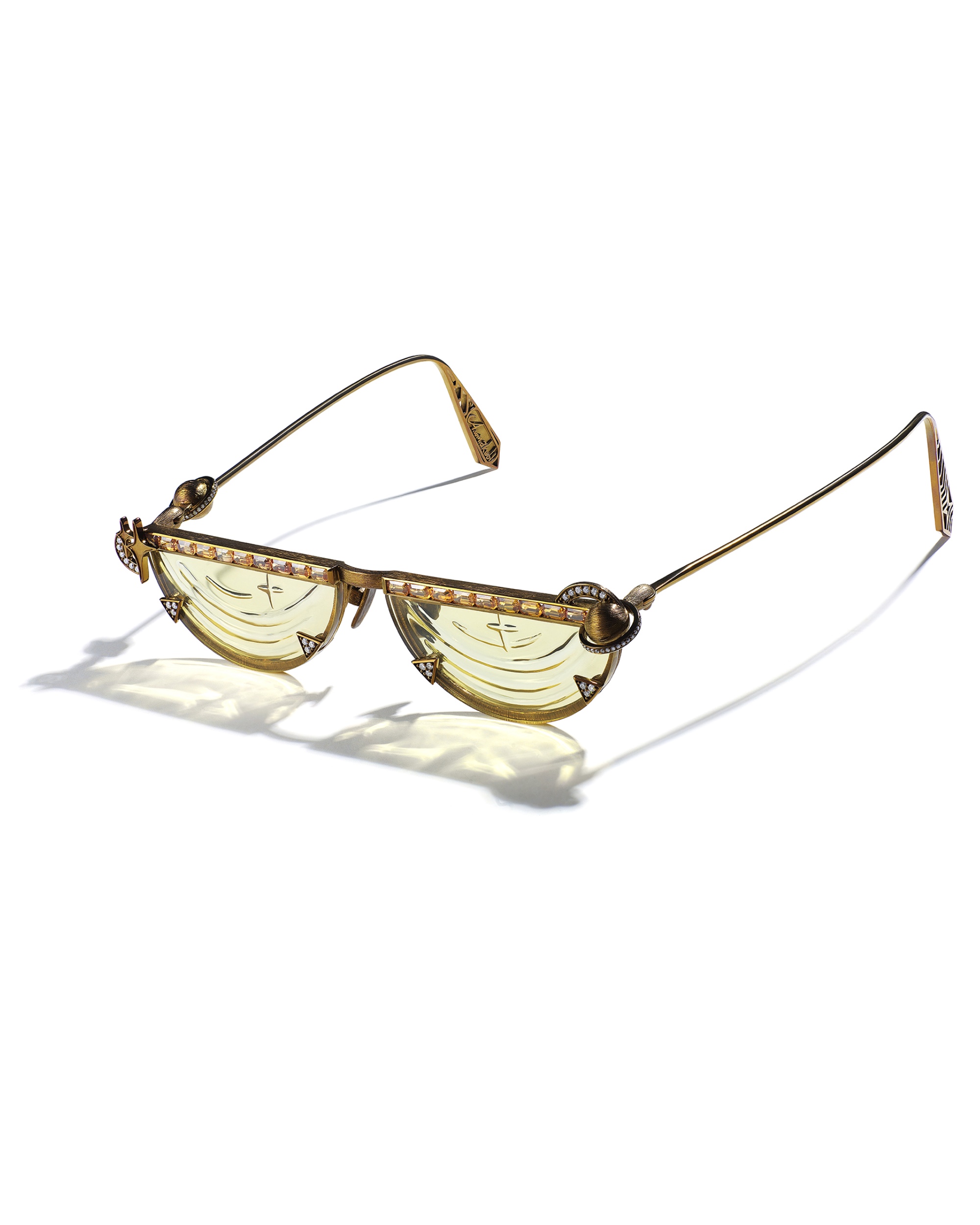
A. win Siu
“The first type of amber I encountered was the “insect amber”. At that time, my attention was attracted by the small bugs wrapped in the bug paper. Everyone knows that ordinary gems are gradually formed in the earth over a long period of time, and the formation of insect amber began with a moment of coincidence, so when I saw the insect amber, I sighed – “This is the frozen time!”
Amber is very special to me. I often consider the tactility of materials in my designs. Crystals and gemstones are usually cool to the touch, so amber is relatively warm in my designs. The production process of amber will be difficult because the hardness of amber is not high, which increases the loss rate of amber during processing.
I think amber is an irreplaceable material in artistic creation. There are many different categories of amber, many different colors, and even the transparency will be different, so the choice is very high. Using amber in creation will make the work appear warmer (at least it won’t feel cold to the touch), and this is a texture that other minerals cannot replace.
I like to use amber on a large scale in the creation of some jewelry works, because compared to the same volume, amber is very light and can increase the wearing comfort of the entire piece.
In China, amber designs are generally conservative. Most of them are ground into beads and worn as bracelets. There are relatively few refreshing designs, which also leads to many young people not choosing to wear amber. But I think amber jewelry with a sense of design will be a completely new market. Many times consumers don’t choose amber, not necessarily because they don’t like it, or because the design works currently on the market cannot meet consumers’ aesthetic needs.”
Iryna Karpova, Organic Jewellery
“Amber holds more than mere beauty for me. It represents an entire universe, a living force that pulsates with warmth and life energy, permeating like veins thread through our planet. Mostly, it lies deep and is difficult to extract. In Ukraine, however, amber is practically on the surface, and in the 90s, after the country got its independence from the USSR, several large deposits were discovered.
When I first saw the raw amber specimens, I was astonished: they looked like burnt pirozhki with a brown crust, and you never know what is hidden under it unless you crack them open. This anticipation intrigues me, as the spectrum of Ukrainian amber ranges from bone white to transparent purplish-red.
Once amber unveils its beauty, it becomes a lifelong affair, as seen through my personal experience. I started working with amber in the 90s and in my first pieces amber was framed in silver and also gold, emphasizing its sunniness. Back then I started combining amber with wood, and it seemed so natural to me because amber was actually born from wood. For two decades, I’ve been working with amber, getting to know this material, that is soft, yet challenging to elaborate. Alongside my team, we’ve experimented with shapes and combined amber with various materials. I particularly enjoyed blending milky amber with enamels, rubies, emeralds, gold, and diamonds. As an organic material, it breathes life into jewelry, and for this reason inspired me to use it frequently in Orthodox themes.
I’ve always wanted to convey the beauty and uniqueness of this gem to people, to rehabilitate it. To move away from the cliché that persisted for many years in the post-Soviet space: that amber is outdated, meant only for beads, and exclusively for older ladies. Over two decades of exploration culminated in the Organic Jewellery, where amber is the protagonist of every piece and symbolizes life in all its diversity. In these ornaments I aim to unveil the artistic potential of amber, its uniqueness, and individuality.
Within the Organic Jewellery, pieces embody a clean, concise form, resembling miniature sculptures that are both visually appealing and comfortable to wear, thanks to the meticulous work that one could appreciate taking closer look.
Each piece is like a whole world, a separate story. I would like my works to bring joy and inspiration to people, encouraging them to contemplate important things. Through contemplation and interaction with them, one might explore the world and oneself. I hope that people will get curious to learn more about amber and will discover its beauty and versatility, and love amber as I do.”
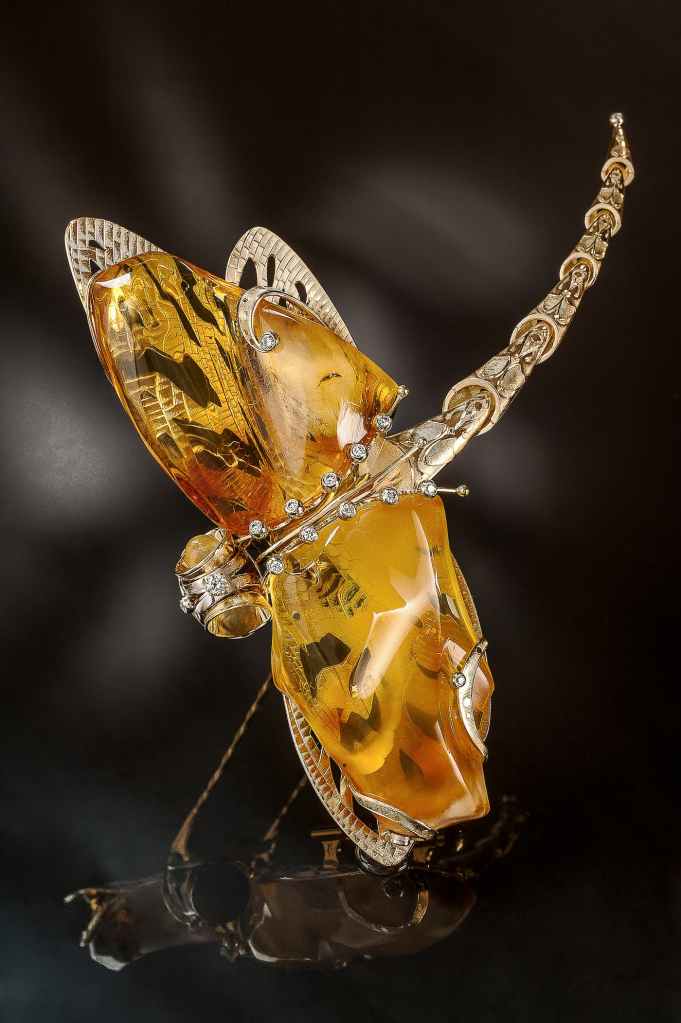
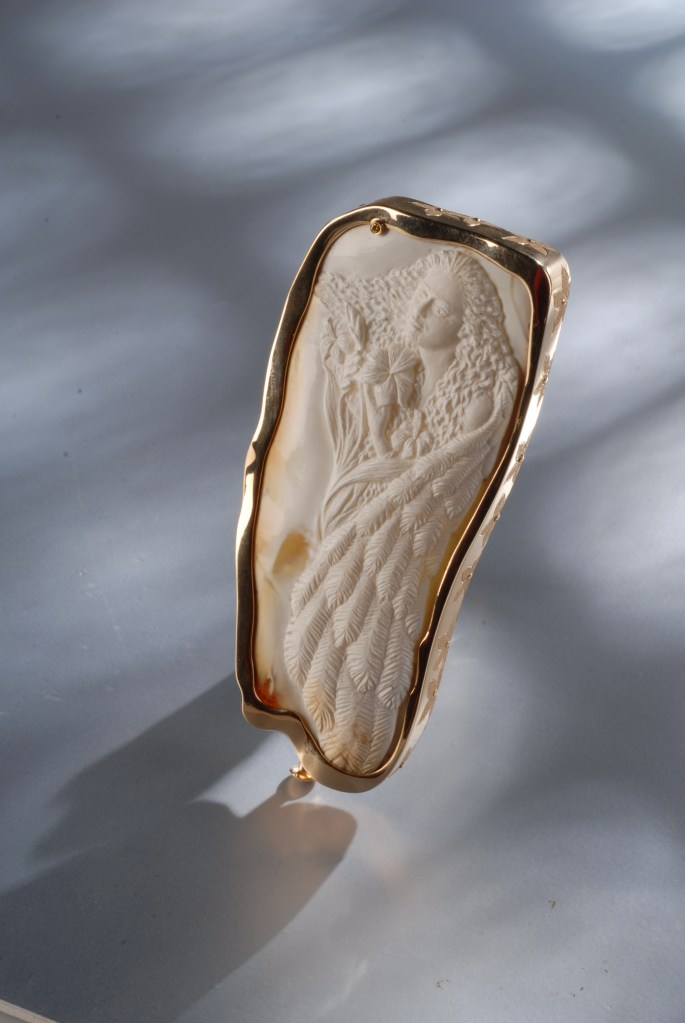
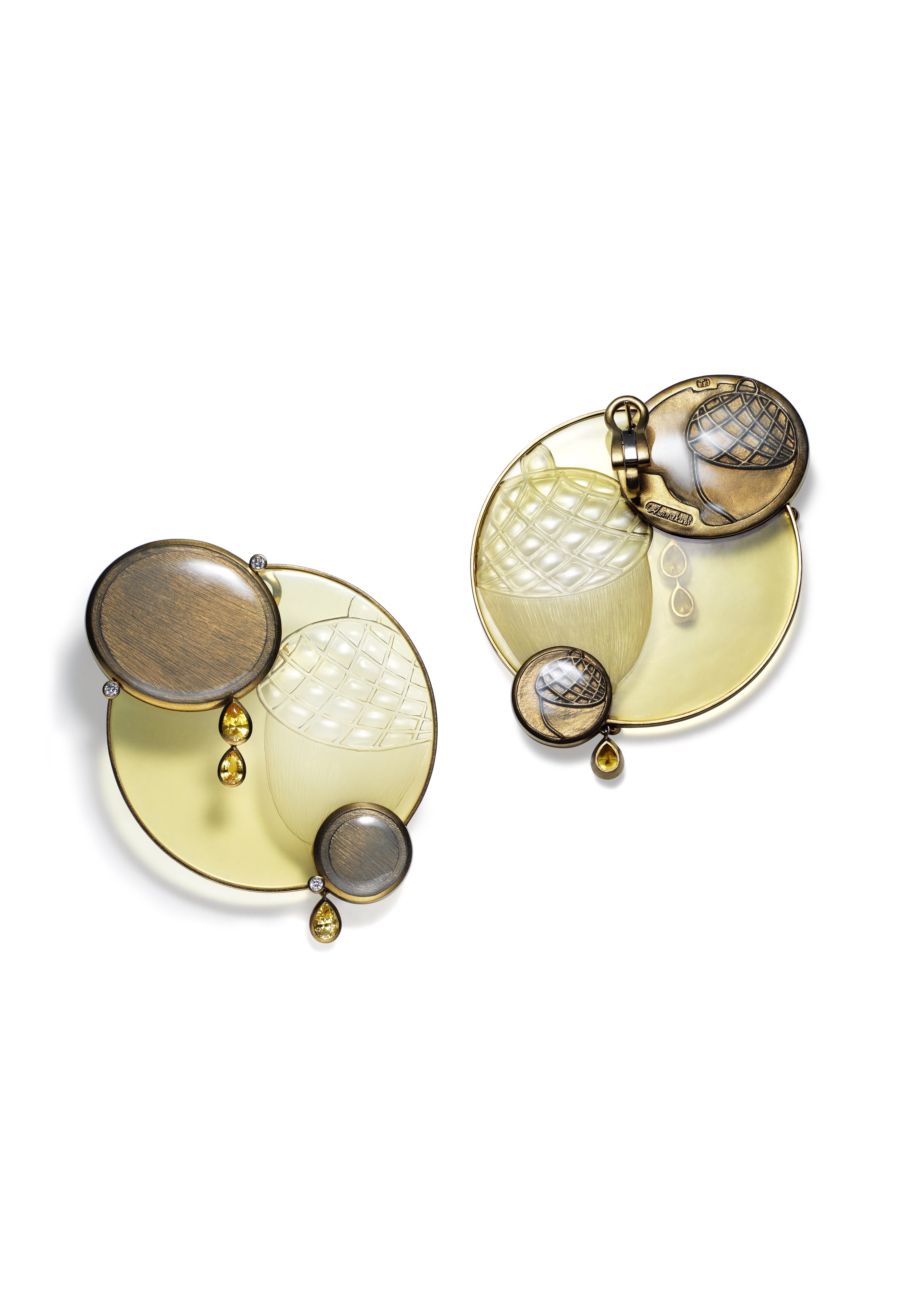
hand engraving. A unique piece, 2009. Courtesy Iryna Karpova Organic Jewellery.
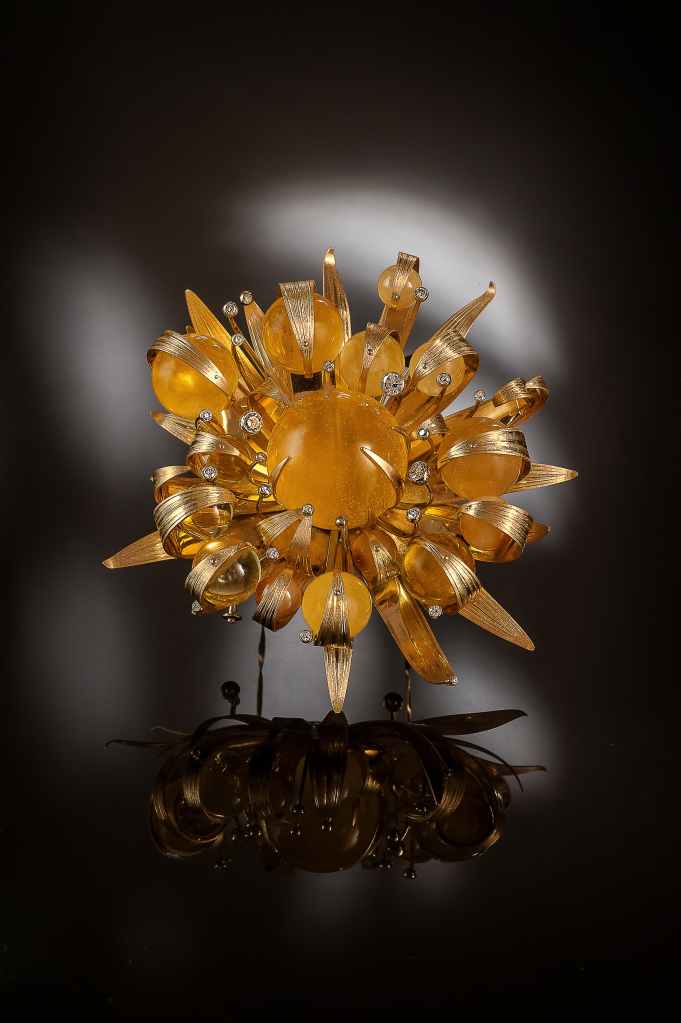
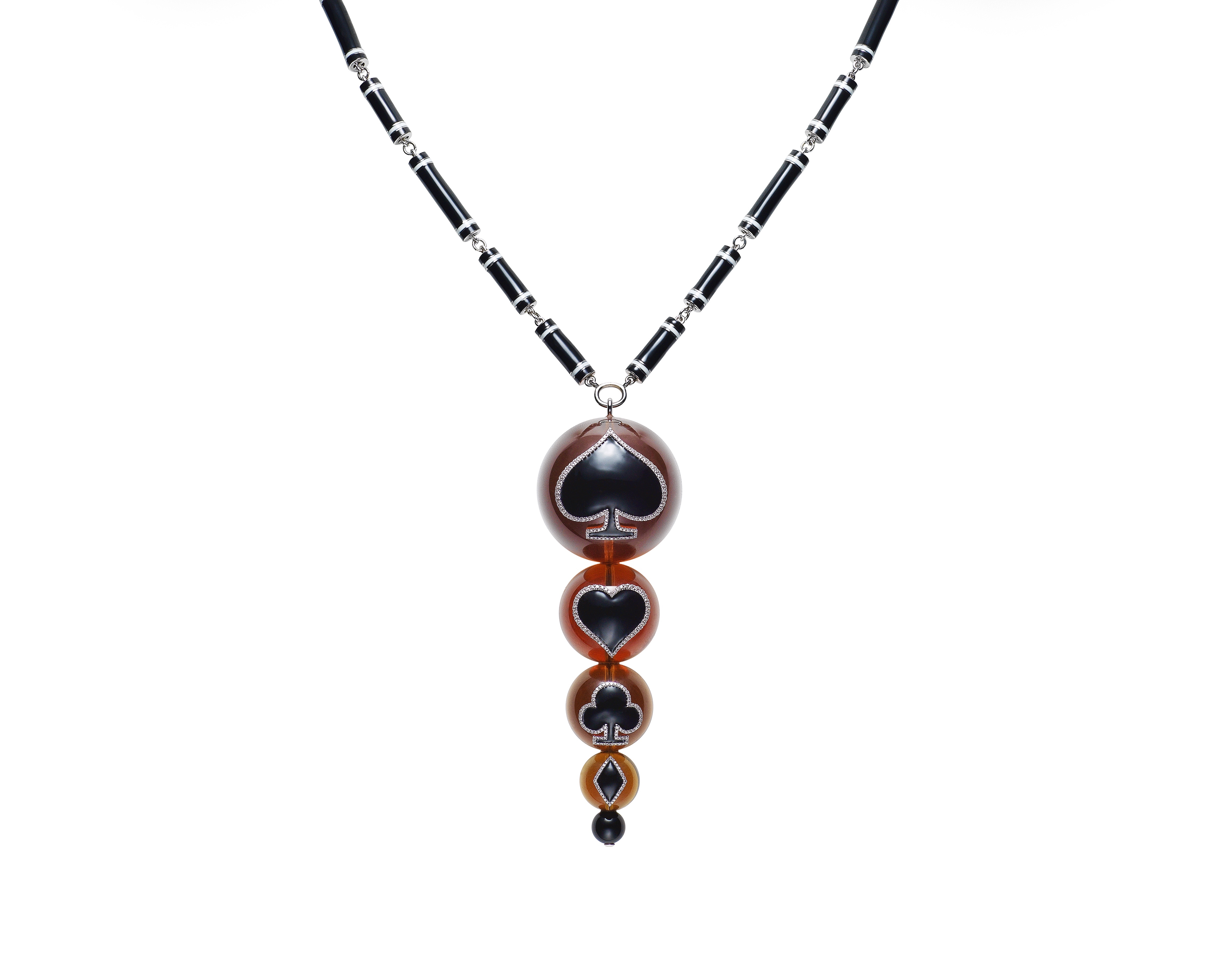
A unique piece, 2018. Courtesy Iryna Karpova Organic Jewellery.
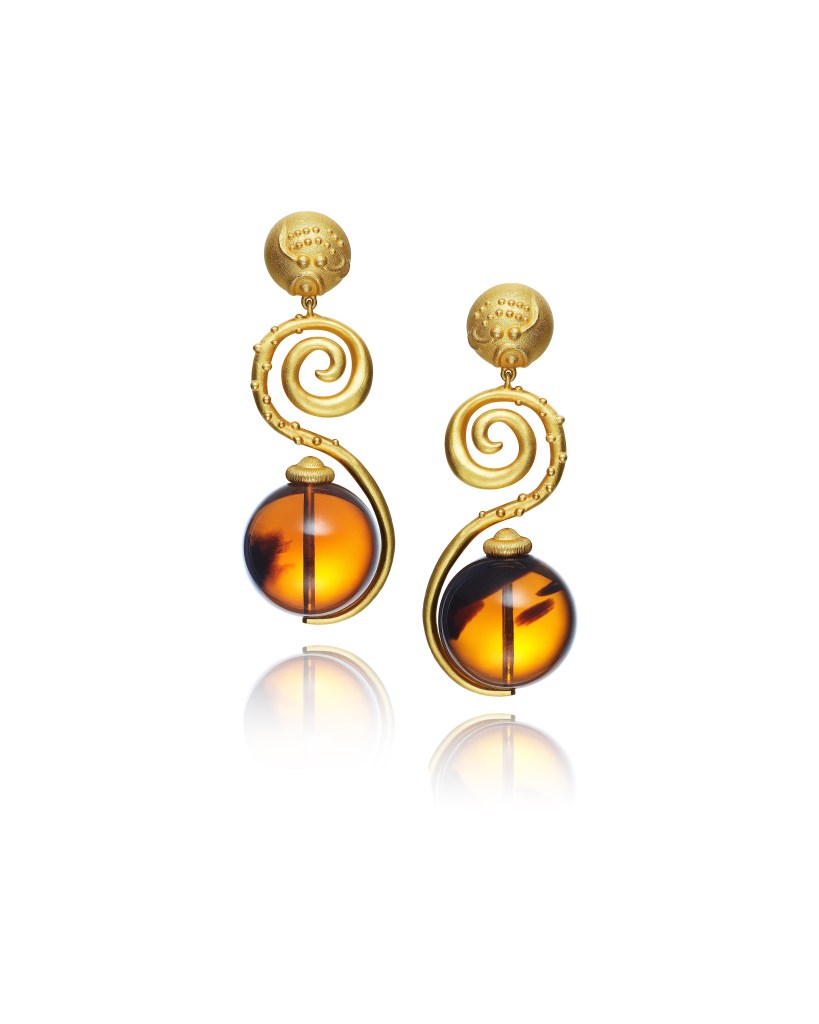
Ming Jewellery
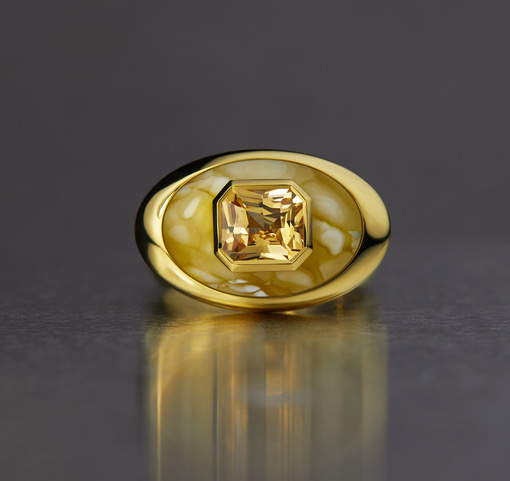
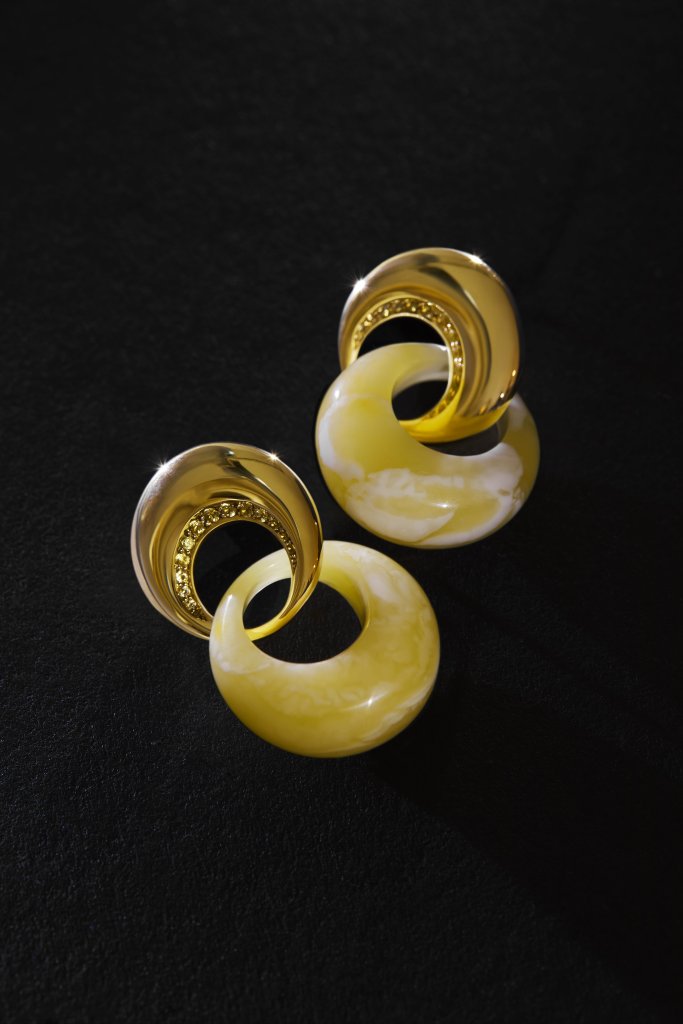
“I have been creating one-of-a-kind jewels for the last twenty years and have featured amber a few times. I love the soft golden colour of natural untreated amber and the patterns within.
My last collection entitled ‘Origins’ was inspired by the earliest forms of jewellery. I took the concept of a pebble with a hole in it being the first talisman as a starting point to create modern fine jewellery. The collection featured materials that would have been used in Neolithic times such as amber and jade. Gemstones that would have been used from the earliest time of humans.
The softness and lightness of amber makes it a beautiful material to carve and it’s rich warm colour contrasts beautifully with the glow of 18ct yellow gold.”
Otto Jakob
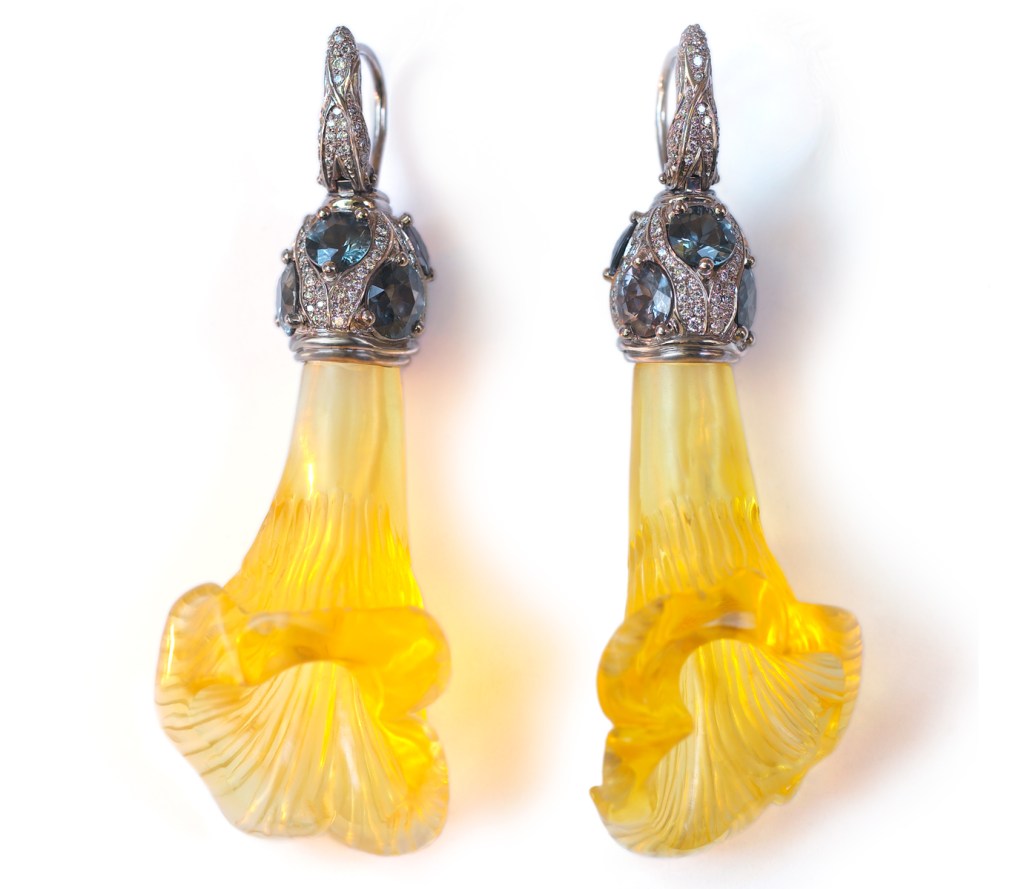
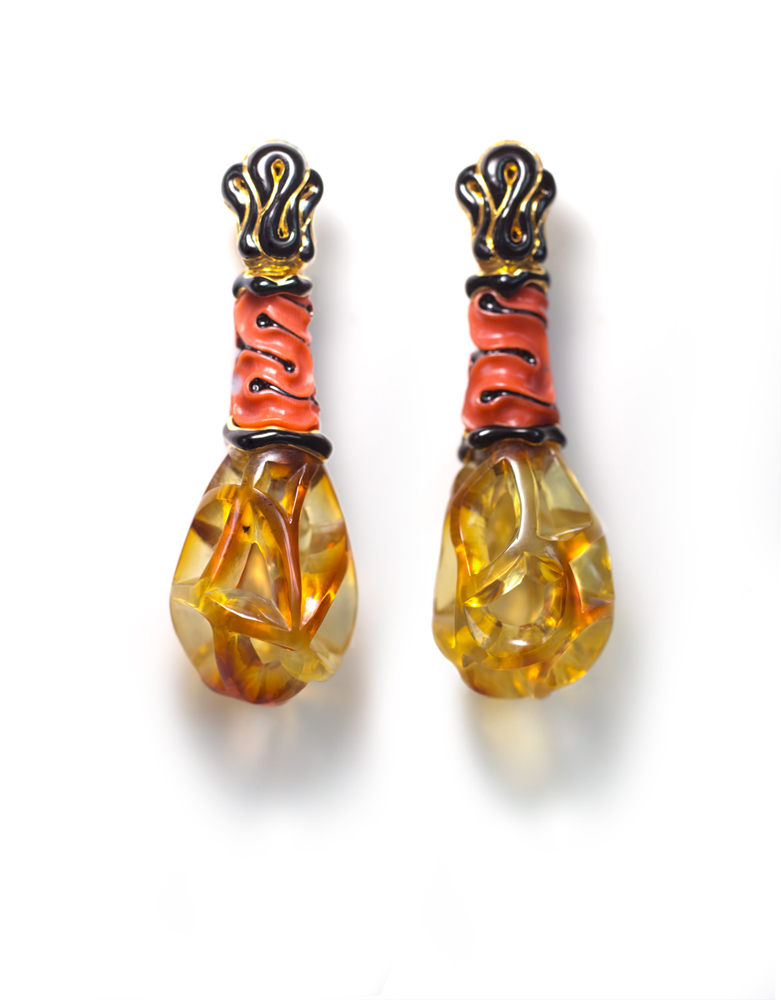
“I believe amber is a wonderful material that lends itself excellently to figurative work. Unfortunately, it often suffers from being worked on at a rather basic level, reduced to meaningless pearls and beads. There are two aspects of amber that I particularly admire: its historical significance as a carrier of meaning in archaic pieces and the extravagant use of it during the Baroque era.In my own work with this material, which took place between 2005 and 2010, my aim was to encapsulate these two components on a miniature scale and adapt them into contemporary jewelry.”
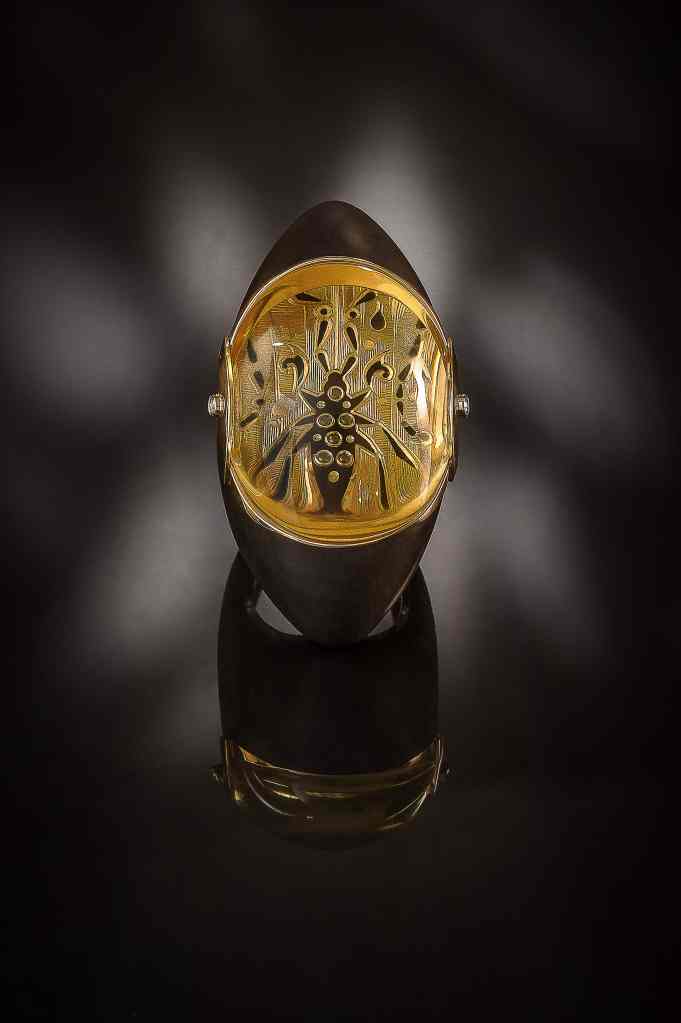
 a piece of jewelry